Nowadays, student have difficulty in deciding which university they want to apply to.This is because they have ‘herd mentally’ of what they want to pursue to.In order to solve this problem, student should consider the course that offered by yhe university, facilities provided and fees that will charged during the study period.
First and foremost,the course provided by the current university are sometimes not relevant to the future jobs that will be offered to the graduate.For the instance,the course offered is not accredited and the certificate did not get approval from National Board of Accreditation (LAN).The complication is on the job prospective side.Thus,the student did not acquiring the relevant position to their certificate.It such an opposite way,where the university education is the stepping stone towards acquiring a position in competitive profession.
Beside that, the university education encourage life learning process.There should be a constant need for intellectual satisfaction.To fullfiled the satisfaction,the fully equipment and facilities must be considered.The facilities such as library and source of internet must be on the top.The exposure in reading materials in library is very helping on student to complete the assignment.The wireless internet is also necessity.Hostel and transportation are vital for ease in living facilities.For the instance,providing shuttle bus is necessary when the hostel is far from the campus.In addition,it will minimize the living cost among students.
Apart from all, the fees charged of each course is should be considered.This is because some college offered the high fees for each course. Futhermore,not everyone afford to pay the expansive fees.Otherwise,its very important for college student ‘wanna be’ made some research in web or pamphlet about the college that they want to apply to.It ‘s vital for them to investigate the fixed charged for the fees and avoid the hidden charges in future.Some non reliable college using the bad tactic and did not mention about the extra fees that will be pay by student.
In conclusion, the problem in deciding which university the student want to apply to can be solve by considering some important factor like course offered,facilities provided and fees.Hence,the university education is of utmost importance for survival if we want to have the edge in today competitive markets.So choose the right choice for the better future.

We ArE fRoM dIpLoMa iN nUrSiNg StUdEnt FrOm KPJ iNtErNatiOnAL cOlLeGe Of NuRsInG & aLlIeD sCiEnCE.. tHiS bLOg IS cREAted tO UpDatED oUR MUET taSk & aSsIGnMeNT..
dats our college..cool huh!

dats our college..c0ol huh!!
Thursday, August 19, 2010

Tuesday, August 17, 2010
10 Food To boost Your Brain

Opt for wholegrain food
Walk into a room and forget why you're there? Forget already what this article's about? Make sure you're eating a diet rich in a mix of wholegrain foods such as cereals, wheatbran, wheatgerm and wholewheat pasta. One study found that women who increased their folic acid, vitamin B12 and vitamin B6 intake showed an improvement in Enjoy oily fish
The essential omega-3 fatty acids - found in oily fish, as well as fish oil,
walnut oil and flaxseeds (linseeds) - are high in DHA, fatty acid crucial to the health of our nervous system. Low DHA levels have been linked to a higher risk of developing Alzheimer's disease and memory loss. Fish also contains iodine, which is known to improve mental clarity.
Binge on blueberries Research from Tufts University in the United States and published in the Journal of Neuroscience suggests that blueberry extract can improve short term memory loss. Widely available, so there's no excuse!recalling information compared to women who were not taking a supplement.
Eat more tomatoes
 There is good evidence to suggest that lycopene, a powerful antioxidant found in tomatoes, could help protect against the kind of free radical damage to cells which occurs in the development of dementia, particularly Alzheimer'
Add vitality with vitamins
Folic acid and vitamin B12 help prevent homocysteine from building up in the body - levels of which have been found to be higher in people who have Alzheimer's.
Fortified cereals are a great source of B12 and also contain complex carbohydrates which release energy over a long period and will keep you more mentally alert throughout the day.
Folic acid and vitamin B12 help prevent homocysteine from building up in the body - levels of which have been found to be higher in people who have Alzheimer's.
Fortified cereals are a great source of B12 and also contain complex carbohydrates which release energy over a long period and will keep you more mentally alert throughout the day.
 Get a blackcurrant boost
 Vitamin C has long been thought to have the power to increase mental agility. One of the best sources of this vital vitamin is blackcurrants.
Pick up pumpkin seeds
Just a handful a day is all you need to get your recommended daily amount of zinc, vital for enhancing memory and thinking skills.
Just a handful a day is all you need to get your recommended daily amount of zinc, vital for enhancing memory and thinking skills.
Bet on broccoli A great source of vitamin K, which is known to enhance cognitive function and improve brainpower.
 Sprinkle on sage
 Sage has long had a reputation for improving memory and although most studies focus on sage as an essential oil, it could be worth adding fresh sage to your diet, too.
Go nuts
A study published in the American Journal of Epidemiology suggests that a good intake of vitamin E might help to prevent poor memory. Nuts are a great source of vitamin E along with leafy green vegetables, seeds, eggs, brown rice and wholegrains.
A study published in the American Journal of Epidemiology suggests that a good intake of vitamin E might help to prevent poor memory. Nuts are a great source of vitamin E along with leafy green vegetables, seeds, eggs, brown rice and wholegrains.
 Brainpower supplements
 Two supplements are causing excitement within the medical world. The first Eye Q, a blend of high grade marine fish oil and evening primrose oil, is thought to boost brainpower in children. A study by Durham County Council and Mansfield College, Oxford, concluded that 40 per cent of the children sampled improved both their reading skills and attention spans when taking the supplements.The second is called Ethos Endymion, which contains L-Carnosine, a strong antioxidant which appears to have dramatic results for a number of conditions: cataracts, improving skin tone, speeding up wound healing, and protecting the brain from plaque formation that may lead to senility and Alzheimer's. L-Carnosine is found in chicken and lean red meat so this powder supplement could be especially useful for veggies.
The Miracle Of Aloe Vera
Aloe Vera is a member of the Lily family, it is a succulent, perennial plant that closely resembles a Cactus. It is a xerophyte, meaning that it thrives in warm, rather arid areas hence it’s African origins. It does not thrive in cold frosty conditions.
Note: Aloe Vera is currently the only known natural source of vitamin B12.
Note: Aloe Vera is currently the only known natural source of vitamin B12.
Aloe Vera gel is unquestionably one of the most powerful and naturally occurring antioxidants available today.
Aloe Vera and Benefits of Antioxidants
It contains a cocktail of antioxidant vitamins that disarm these harmful free radicals and assist you in achieving optimum health.
Vitamins Vitamin A (Beta-Carotene), B, C and E – which are just a few of the components of Aloe Vera – are examples of these antioxidant vitamins.
Antioxidants supplied by the human body include Glutathione, Alpha-lipoic acid and coenzyme Q10.
Over time the balance between your intake of antioxidants and free radicals could easily mean the difference between a long, healthy life and early, premature death.
Aloe Vera and Cancer: What’s the Truth?
Researchers writing in Cancer Immunology and Immunotherapy found that Aloe Vera has the ability to activate the immune system to attack cancerous cells.
Aloe Vera ’switches’ on the immune system by activating macrophages (white blood cells which ’swallow’ antigens), causing the release of immune-activating and anti-cancer substances such as Interferons and Interleukines.
In addition Aloe Vera promotes the growth of normal (non-cancerous) cells.
Note: An antigen is a substance that when introduced into the body stimulates the production of an antibody. Antigens include toxins, bacteria, foreign blood cells, and the cells of transplanted organs.
Can Aloe Vera help with Sun Burn?
Aloe Vera because of its nutritional qualities and antioxidant properties, helps first of all to prevent injury to epithelial – skin – tissues and increases the rate of healing when these tissues are damaged.
Topical application of Aloe Vera gel has a moisturising effect on the skin and is a common and very successful remedy for Sun Burn and skin irritation.
Aloe Vera penetrates to the water retaining second layer of skin, helping to slough off the dead cells gathered there and to dissolve the roots of infection. Aloe Vera also fosters the growth of healthy new tissue.
The F.D.A. in 1959 stated "upon review the F.D.A. admits that Aloe Vera does actually regenerate skin tissue".
The skin absorbs the moisture in Aloe Vera up to 4 times faster than water, protecting the outer layers of the skin by helping it to reorganise skin cells and by offering great moisturising properties.
It appears that Aloe Vera can help the pores of the skin to open and receive the moisture and nutrients contained in it.
However, not only can Aloe Vera help with Sun Burn and the possible effects of Sun Burn like Melanoma, it has been used successfully in the treatment of some other forms of cancer.
What Can Aloe Vera Heal?
Aloe Vera helps heal Wounds:
The bulk of the Aloe Vera leaf is filled with gel, approximately 99% water with the other 1% containing over 75 known nutrients.
Applied to wounds the Aloe Vera gel acts as a mild anaesthetic, relieving itching, swelling and pain. It is also anti-bacterial and anti-fungal, it increases blood flow to wounded areas and stimulates fibroblasts – the skin cells responsible for wound healing.
Aloe Vera heals Psoriasis Lesions
In double-blind, placebo-controlled study published in Tropical Medicine and International Health, 60 patients with chronic psoriasis were given a 0.5% Aloe Vera extract in a mineral oil cream.
The ointment was applied 3 times daily for 5 consecutive days – 15 applications in total per week – for 4 weeks.
When patients were checked after 8 months, far more psoriasis skin lesions had healed in the Aloe Vera group (82.8%) than in the placebo group (7.7%).
In addition, 83.3% of the Aloe Vera group were considered cured of their psoriasis compared to only 6.6% of the placebo group.
Note: A placebo is a substance or preparation used especially in controlled experiments to determine the effectiveness of another substance (as a medicinal drug).
Even more answers to… what can Aloe Vera heal?
Aloe Vera eases Intestinal Problems
The Aloe Vera gel can be effective for treating inflammatory bowel diseaseaccording to a study in the Journal of Alternative Medicine.
10 patients were given 2 ounces of Aloe Vera gel, 3 times daily for 7 days. After 1 week, all patients were cured of diarrhoea, 4 had improved bowel regularity and 3 reported increased energy.
Researchers concluded that Aloe Vera was able to rebalance the intestines by “regulating gastrointestinal pH while improving gastrointestinal motility, increasing stool specific gravity, and reducing populations of certain fecal microorganisms, including yeast.
Other studies have shown that the Aloe Vera gel helps to detoxify the bowel, neutralize stomach acidity and relieve constipation and gastric ulcers.
Aloe Vera reduces Arthritic Swelling
According to the Journal of the American Podiatric Medical Association, Aloe Vera gel can help prevent arthritis and reduce the inflammation in joints already affected by arthritis.
Aloe Vera can also inhibit the autoimmune reaction associated with certain forms of arthritis in which the body attacks its own tissues.
Because of its ability to balance the pH of the blood and increase digestion and absorption, Aloe Vera gel strengthens the immune system.
Taken regularly over a period of several months, Aloe Vera helps to regulate the function of the liver.
More answers to… What can Aloe Vera heal?
You can also read about medical research that shows how Aloe Vera ‘activates’ the human immune system to attack cancerous cells.
Aloe Vera is also being used in dental practice and has been studied to fight against Feline Leukemia Virus with positive results.
Aloe Vera is excellent as well in the treatment of Rosacea and broken capillaries, drinking the Aloe Vera gel helps to maintain a steady blood pressure while applying it topically assists in preventing the capillaries just under the skin from swelling.
In the near future we are sure to see usage of Aloe Vera for eye disease, possibly in eye drops because of it’s ability to coat and protect against UV rays.
Continue from what can Aloe Vera heal to facts on the Aloe Vera gel for further information on the medicinal uses of Aloe Vera and the increasing use of Aloe Vera in cosmetics!
Aloe Vera For Weight Loss
Aloe Vera also has a high content of Collagen protein. Supplementing Aloe Vera in the diet increases protein intake. Proteins are naturally difficult to digest and the body spends more energy assimilating them into the system.
This additional expenditure of energy is well suited for someone who wants to exchange flab for brawn. Imagine a weight loss supplement that builds you up while burning your fat stores at the same time!Aloe Vera decreases the transit time that food spends in the intestin
Top Ten Reasons To Drink Aloe Vera!
1) Aids in Healthy Digestion
2) Immune Support and Function
3) Anti-inflammatory Properties
4) Body “Building Blocks”
5) Daily Dose of Vitamins
6) Collagen and Elastin Repair
7) Regulates Weight and Energy Levels
Provides Rapid Soothing
9) Daily Dose of Minerals
10) Dental Health and Hygiene
Dysmenorrhea
Dysmenorrhea (or dysmenorrhoea) is a gynecological medical condition characterized by severe uterine pain during menstruation. While most women experience minor pain during menstruation, dysmenorrhea is diagnosed when the pain is so severe as to limit normal activities, or requiremedication.
Dysmenorrhea can feature different kinds of pain, including sharp, throbbing, dull, nauseating, burning, or shooting pain. Dysmenorrhea may precede menstruation by several days or may accompany it, and it usually subsides as menstruation tapers off. Dysmenorrhea may coexist with excessively heavy blood loss, known as menorrhagia.
Secondary dysmenorrhea is diagnosed when symptoms are attributable to an underlying diease,disorder or structural abnormality either within or outside the uterus. Primary dysmenorrhea is diagnosed when none of these is detected.
Molecular compounds called prostaglandin are released during menstruation, due to the destruction of the endometrial cells, and the resultant release of their contents. Release of prostaglandin and other inflammatory mediators in the uterus cause the uterus to contract. These substances are thought to be a major factor in primary dysmenorrhea. When the uterine muscles contract, they constrict the blood supply to the tissue of the endometrium, which, in turn, breaks down and dies. These uterine contractions continue as they squeeze the old, dead endometrial tissue through thecervix and out of the body through the vagina. These contractions, and the resulting temporary oxygen deprivation to nearby tissues, are responsible for the pain or "cramps" experienced during menstruation.
Compared with other women, females with primary dysmenorrhea have increased activity of the uterine muscle with increased contractility and increased frequency of contractions
fatty acids,magnesium, vitamin E.
Dysmenorrhea can feature different kinds of pain, including sharp, throbbing, dull, nauseating, burning, or shooting pain. Dysmenorrhea may precede menstruation by several days or may accompany it, and it usually subsides as menstruation tapers off. Dysmenorrhea may coexist with excessively heavy blood loss, known as menorrhagia.
Secondary dysmenorrhea is diagnosed when symptoms are attributable to an underlying diease,disorder or structural abnormality either within or outside the uterus. Primary dysmenorrhea is diagnosed when none of these is detected.
Classification
Dysmenorrhea can be classified as either primary or secondary based on the absence or presence of an underlying cause. Secondary dysmenorrhea is dysmenorrhea which is associated with an existing condition. The most common cause of secondary dysmenorrhea is endometriosis Other causes include adenomyosis ovarian cyst, and pelvic congestions. The presence of a copper IUD can also cause dysmenorrhea.Signs and symptoms
The main symptom of dysmenorrhea is pain concentrated in the lower abdomen in the umbilical region or the suprapubic region of the abdomen. It is also commonly felt in the right or left abdomen. It may radiate to the thigh and lower back. Other symptoms may include nausea andvomiting, diarhea orconstipation,headche , hypersensitivity to sound, light, smell and touch,fainting, and fatigue. Symptoms of dysmenorrhea often begin immediately following ovulation and can last until the end of menstruation. This is because dysmenorrhea is often associated with changes in hormonal levels in the body that occur with ovulation. The use of certain types of birth control pills can prevent the symptoms of dysmenorrhea, because the birth control pills stop ovulation from occurring.Pathophysiology
During a woman's menstrual cycle, the endometrium thickens in preparation for potential pregnancy. After ovulation, if the ovumi s not fertilized and there is no pregnancy, the built-up uterine tissue is not needed and thus shed.Molecular compounds called prostaglandin are released during menstruation, due to the destruction of the endometrial cells, and the resultant release of their contents. Release of prostaglandin and other inflammatory mediators in the uterus cause the uterus to contract. These substances are thought to be a major factor in primary dysmenorrhea. When the uterine muscles contract, they constrict the blood supply to the tissue of the endometrium, which, in turn, breaks down and dies. These uterine contractions continue as they squeeze the old, dead endometrial tissue through thecervix and out of the body through the vagina. These contractions, and the resulting temporary oxygen deprivation to nearby tissues, are responsible for the pain or "cramps" experienced during menstruation.
Compared with other women, females with primary dysmenorrhea have increased activity of the uterine muscle with increased contractility and increased frequency of contractions
Treatments
Nutritional
Several nutritional suplements have been indicated as effective in treating dysmenorrhea, including OMEGA-3fatty acids,magnesium, vitamin E.
NSAID
nOn-steroidal anti inflammatory drug (NSAIDs) are effective in relieving the pain of primary dysmenorrhea.
APPENDICITIS
Appendicitis is a condition characterized by inflammation of the appendix. It is classified as a medical emergency and many cases require removal of the inflamed appendix, either by laporatomyr or laporoscopy. Untreated, mortality is high, mainly because of peritonitis and shock. Reginal fitz first described acute and chronic appendicitis in 1886,and it has been recognized as one of the most common causes of severe acute abdominal pain worldwide. A correctly diagnosed non-acute form of appendicitis is known as "rumbling appendicitis".

 Location of the appendix in the digestive systemThese include localized findings in the right illiac fossa. The abdominal wall becomes very sensitive to gentle pressure (palpation). Also, there isrebound tenderness.
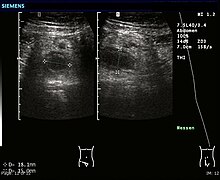 Ultrasound image of an acute appendicitis. Ultrasonography and Doppler sonography provide useful means to detect appendicitis, especially in children.
In some cases (15% approximately), however, ultrasonography of the iliac fossa does not reveal any abnormalities despite the presence of appendicitis.
 A cat scan demonstrating acute appendicitis (note the appendix has a diameter of 17.1mm and there is surrounding fat stranding.)
  A fecalith marked by the arrow which has resulted in acute appendicitis. In places where it is readily available, has be CT scancome frequently used, especially in adults whose diagnosis is not obvious on history and physical. Concerns about radiation, however, tend to limit use of CT in pregnant women and children.
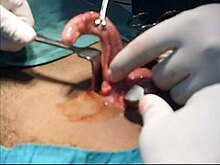 Inflamed appendix removal by open surgery
Once the decision to perform an appendectomy has been made, the preparation procedure takes more or less one to two hours. Meanwhile, the surgeon will explain the surgery procedure and will present the risks that must be considered when performing an appendectomy. With all surgeries there are certain risks that must be evaluated before performing the procedures. However, the risks are different depending on the state of the appendix. If the appendix has not ruptured, the complication rate is only about 3% but if the appendix has ruptured, the complication rate rises to almost 59%.The most usual complications that can occur are pneumonia, hernia of the incision, thrombophlebitis, bleeding or adhesion.
The surgeon will also explain how long the recovery process should take. Abdomen hair is usually removed in order to avoid complications that may appear regarding the incision. In most of the cases patients experience nausea or vomiting which requires specific medication before surgery. Antibiotics along with pain medication may also be administrated prior to appendectomies.
In the past (and in some medical textbooks that are still published today), it has been commonly accepted that pain medication not be given until the surgeon has the chance to evaluate the patient, so as to not "corrupt" the findings of the physical examination. This line of practice, combined with the fact that surgeons may sometimes take hours to come to evaluate the patient, especially if he or she is in the middle of surgery or has to drive in from home, often leads to a situation that is ethically questionable at best. More recently, due to better understanding of the importance of pain control in patients, it has been shown that the physical examination is actually not that dramatically disturbed when pain medication is given prior to medical evaluation. Individual hospitals and clinics have adapted to this new approach of pain management of appendicitis by developing a compromise of allowing the surgeon a maximum time to arrive for evaluation, such as 20 to 30 minutes, before active pain management is initiated. Many surgeons also advocate this new approach of providing pain management immediately rather than only after surgical evaluation.
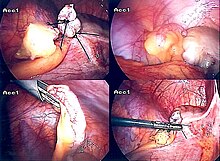 Laparoscopic appendectomy. The surgical procedure for the removal of the appendix is called an appendicectomy (also known as an appendectomy). Often now the operation can be performed via a laparoscopic approach, or via three small incisions with a camera to visualize the area of interest in the abdomen. If the findings reveal suppurative appendicitis with complications such as rupture, abscess, adhesions, etc., conversion to open laparotomy may be necessary. An open laparotomy incision if required most often centers on the area of maximum tenderness, in the right lower quadrant. A transverse or a gridiron diagonal incision is used most commonly.
Signs

Causes
On the basis of experimental evidence, acute appendicitis seems to be the end result of a primary obstruction of the appendix lumen.Once this obstruction occurs the appendix subsequently becomes filled with mucus and swells, increasing pressures within the lumen and the walls of the appendix, resulting in thrombosis and occlusion of the small vessels, and stasis oflyphatic flow. Rarely, spontaneous recovery can occur at this point. As the former progresses, the appendix becomes ischemic and then necrotic. Asbacteria begin to leak out through the dying walls,pus forms within and around the appendix (suppuration). The end result of this cascade is appendiceal rupture (a 'burst appendix') causing peritonitis, which may lead to septicimia and eventually death.Diagnosis
Ultrasound

In some cases (15% approximately), however, ultrasonography of the iliac fossa does not reveal any abnormalities despite the presence of appendicitis.
Computed tomography


Ultrasound and CT compared
According to a systematic review from UC-San Francisco comparing ultrasound vs. CT scan, CT scan is more accurate than ultrasound for the diagnosis of appendicitis in adults and adolescents.Management

Before surgery
The treatment begins by keeping the patient fronm eating and drinking in preparation for surgery. An intravenous drip is used to hydrate the patient. Antibiotics given intravenously such as cefuroxime and metrodinazole may be administered early to help kill bacteria and thus reduce the spread of infection in the abdomen and postoperative complications in the abdomen or wound. Equivocal cases may become more difficult to assess with antibiotic treatment and benefit from serial examinations. If the stomach is empty (no food in the past six hours) general anaesthesia is usually used. Otherwise, spinal anaesthesia may be used.Once the decision to perform an appendectomy has been made, the preparation procedure takes more or less one to two hours. Meanwhile, the surgeon will explain the surgery procedure and will present the risks that must be considered when performing an appendectomy. With all surgeries there are certain risks that must be evaluated before performing the procedures. However, the risks are different depending on the state of the appendix. If the appendix has not ruptured, the complication rate is only about 3% but if the appendix has ruptured, the complication rate rises to almost 59%.The most usual complications that can occur are pneumonia, hernia of the incision, thrombophlebitis, bleeding or adhesion.
The surgeon will also explain how long the recovery process should take. Abdomen hair is usually removed in order to avoid complications that may appear regarding the incision. In most of the cases patients experience nausea or vomiting which requires specific medication before surgery. Antibiotics along with pain medication may also be administrated prior to appendectomies.
Pain management
Pain from appendicitis can be severe. Strong pain medications (i.e. narcotic pain medications) are recommended for pain management prior to surgery. Morphine is generally the standard of care in adults and children in the treatment of pain from appendicitis prior to surgery.In the past (and in some medical textbooks that are still published today), it has been commonly accepted that pain medication not be given until the surgeon has the chance to evaluate the patient, so as to not "corrupt" the findings of the physical examination. This line of practice, combined with the fact that surgeons may sometimes take hours to come to evaluate the patient, especially if he or she is in the middle of surgery or has to drive in from home, often leads to a situation that is ethically questionable at best. More recently, due to better understanding of the importance of pain control in patients, it has been shown that the physical examination is actually not that dramatically disturbed when pain medication is given prior to medical evaluation. Individual hospitals and clinics have adapted to this new approach of pain management of appendicitis by developing a compromise of allowing the surgeon a maximum time to arrive for evaluation, such as 20 to 30 minutes, before active pain management is initiated. Many surgeons also advocate this new approach of providing pain management immediately rather than only after surgical evaluation.
Surgery

Monday, August 16, 2010
Diverticulitis occurs when pockets in the wall of the intestine, called diverticula, become inflamed or infected. Fortunately, sufferers can find relief by following a diverticulitis diet.
A low-residue diet is recommended during the flare-up periods of diverticulitis to decrease bowel volume so that the infection can heal. An intake of less than 10 grams of fiber per day is generally considered a low residue diverticulitis diet. If you have been on a low-residue diet for an extended period of time, your doctor may recommend a daily multi vitamin
Grain Products:
A low-residue diet is recommended during the flare-up periods of diverticulitis to decrease bowel volume so that the infection can heal. An intake of less than 10 grams of fiber per day is generally considered a low residue diverticulitis diet. If you have been on a low-residue diet for an extended period of time, your doctor may recommend a daily multi vitamin
Low Residue Diet for Diverticulitis
- enriched refined white bread, buns, bagels, english muffins
- plain cereals e.g. cheerios, cornflakes, Cream of Wheat, Rice Krispies, Special K
- arrowroot cookies, tea biscuits, soda crackers, plain melba toast
- white rice, refined pasta and noodles
- avoid whole grains
- fruit juices except prune juice
- applesauce, apricots, banana (1/2), cantaloupe, canned fruit cocktail, grapes, honeydew melon, peaches, watermelon
- avoid raw and dried fruits,and berries.
- vegetable juices
- potatoes (no skin)
- alfalfa sprouts, beets, green/yellow beans, carrots, celery, cucumber, eggplant, lettuce, mushroom, green/red peppers, potatoes (peeled),squash, zucchini
- avoid vegetables from the cruciferous family such as broccoli, cauliflower, brussels sprouts, cabbage, kale, Swiss chard etc
- well-cooked, tender meat, fish and eggs
- avoid beans and lentils
- Avoid all nuts and seeds, as well as foods that may contain seeds (such as yogurt)
- as directed by your healthcare providers
When symptoms of diverticulitis improve, you may ease off of the diverticulitis diet and gradually add more fiber back into your diet. A high fiber diet is very important in preventing future diverticulitis attacks. As you increase your fiber intake, increase your fluid intake as well.
Sunday, August 15, 2010


Subscribe to:
Posts (Atom)